Schmälzle, R. & Lim, S. (Submitted / In Press). A neuroscientific window into the audience brain: Capturing how rhetoric creates resonance. The Forensic of Pi Kappa Delta.
Segal, R., Matan, L., Schmälzle, R., & Ben-Zion, Y. (Submitted / In Press). Computational Analysis of Speech Clarity Predicts Audience Engagement in TED Talks. td.
Jeon, M., Lim, S., Lapinski, M., Spates, S., Bente, G., & Schmälzle, R. (2026).
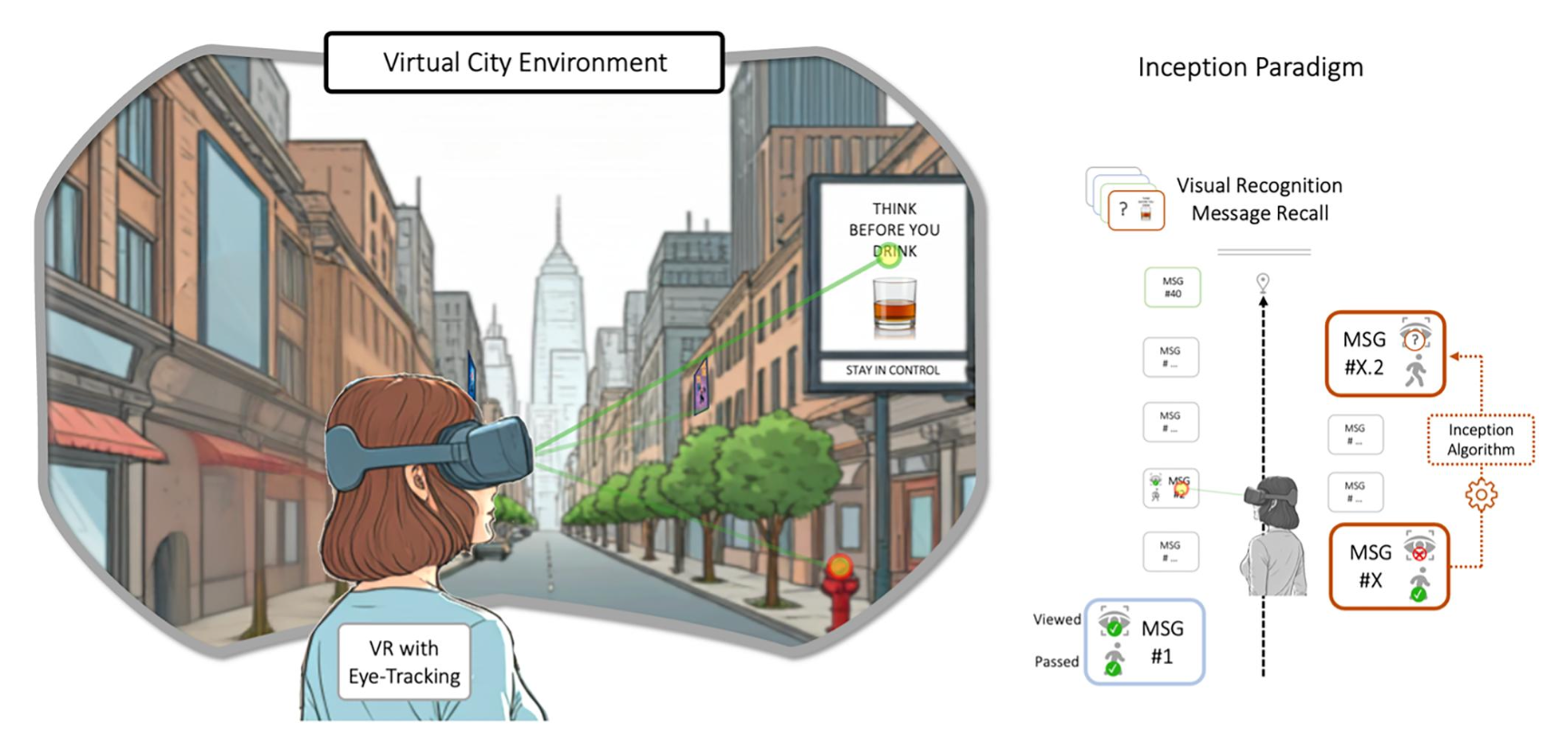
Visual attention and retention effects of a design element in culturally targeted messages: Introducing the Virtual Billboard Paradigm. Communication Quarterly, 1-31.
[PDF] [Code]
Pena, J., Huskey, R., Gong, X., Andrews, M., Weisman, W., Kee, R., Klein, V., Sarieva S, K. R., Schmälzle, R., & Hancock, J. (2025).
Media Neuroscience on a shoestring 2.0: Using AR and mobile EEG hyperscanning to study cooperation. Journal of Media Psychology.
[Code]
Schmälzle, R., Lim, S., Du, Y., & Bente, G. (2025).
The art of audience engagement: LLM-based thin-slicing of scientific talks. arXiv.
[PDF] [Code]
Huskey, R. & Schmälzle, R. (2025). Finding middle ground In cognitive media psychology. In. N. Bowman & N.D. Shackleford (Eds). Oxford Handbook of Media Psychology, 1.
Hussain, A., Schmälzle, R., Lim, S., & Bouali, N. (2025).
Comparing AI and human-generated health messages in an Arabic cultural context. Global Health Action,
18(1), 2464360.
[PDF] [Code]
Lim, S., Schmälzle, R., & Bente, G. (2025).
A VR-based paradigm for examining relationship-building behaviors in LLM-driven intelligent virtual agents (IVAs). Designing and Evaluating Behavioural Paradigms With Proactive Virtual Agents (DEBP-PVA) @ 25th ACM International Conference on Intelligent Virtual Agents (IVA).
Lim, S., Schmälzle, R., & Bente, G. (2025).
Artificial social influence: Rapport-building, LLM-based embodied conversational agents for health coaching. Connect @ 24h ACM International Conference on Intelligent Virtual Agents (IVA).
[PDF]
Schmälzle, R., Lim, S., Du, Y., & Bente, G. (2025).
The art of audience engagement: LLM-based thin-slicing of scientific talks. Frontiers in Communication,
10, 1610404.
[PDF] [Code]
Bente, G., Schmälzle, R., Jahn, N. T., & Reimers, M. (2025).
Reading the Social Clock. Analyzing Nonverbal Coordination Dynamics in Casual Chat and Conflict. Annals of the New York Academy of Sciences.
[PDF]
Schmälzle, R., Wilcox, S., & Huskey, R. (2025).
Brain imaging as a window into the biological basis of social cognition and communication. In. T. Reimer and L. van Swol, Lyn and A. Florack (Eds.). Handbook of Communication and Social Cognition.
Cho, H. J., Lim, S., Turner, M., Bente, G., & Schmälzle, R. (2025).
Eyes on VR: Unpacking the causal chain between exposure, reception, and retention for emotional billboard messages. Human Behavior and Emerging Technologies,
1, 3619411.
[PDF] [Code]
Schmälzle, R. (2025). Eye Tracking (Eye Tracking in Political Education Campaigns). PRIF (Peace Research Institute Frankfurt) Reports.
Schmälzle, R., Lim, S., Jahn, N., Wilcox, S., & Ye, Q. (2024).
Collective brain alignment during story reception: Shared neural responses in French, Chinese, and English listeners of Le Petit Prince (The Little Prince). Asian Communication Research,
21(3), 195-217.
[PDF] [Code]
Tamborini, R., Schmälzle, R., & Bowman, N. D. (2024).
The role of theory in media entertainment research. In. N. Bowman (Eds). DeGryuter Handbook of Entertainment Media and Communication, 1.
Imhof, M. A., Flösch, K. P., Schmälzle, R., Renner, B., & Schupp, H. T. (2024).
Portable EEG in groups shows increased brain coupling to strong health messages. Social, Cognitive, and Affective Neuroscience,
19(1), nsae087.
[PDF]
Schmälzle, R., Lim, S., Bezbaruah, S., Wu, J., & Hussain, S. A. (2024).
Converging crowds and tied twins: Audience brain responses to the same movie are consistent across continents and enhanced among twins. Journal of Media Psychology,
37(3), 144-157.
[PDF] [Code]
Jeon, M., Lim, S., Lapinski, M., Spates, S., Bente, G., & Schmälzle, R. (2024).
Attention and retention effects of culturally targeted billboard messages: An eye-tracking study using immersive Virtual Reality. bioRxiv.
[PDF] [Code]
Cho, H. J., Lim, S., Turner, M., Bente, G., & Schmälzle, R. (2024).
Eyes on VR: Unpacking the causal chain between exposure, reception, and retention for emotional billboard messages. bioRxiv.
[PDF] [Code]
Holmstrom, A., Dorrance-Hall, E., Wilcox, S., & Schmälzle, R. (2023).
Confirmation, disconfirmation, and communal coping for joint physical activity in romantic dyads. Health Communication,
39(6), 1067-1081.
[PDF]
Schmälzle, R. & Huskey, R. (2023).
Integrating media content analysis, reception analysis, and media effects studies. Frontiers in Neuroscience (Neuroscience and the Media),
17, 1155750.
[PDF]
Schmälzle, R., Liu, H., Delle, F., Lewin, K., Jahn, N. T., Zhang, Y., Yoon, H., & Long, J. (2023).
Moment-by-moment tracking of audience brain responses to an engaging public speech: Replicating the reverse-message engineering approach. Communication Monographs,
91(1), 31-55.
[PDF] [Code]
Schmälzle, R., Lim, S., Cho, H. J., Wu, J., & Bente, G. (2023).
Examining the exposure-reception-retention link in realistic communication environments via VR and eye-tracking: The VR billboard paradigm. PlosOne,
18(11), e0291924.
[PDF] [Code]
Bente, G., Schmälzle, R., Kryston, K., & Jahn, N. (2022).
Building blocks of suspense. Subjective and physiological effects of narrative content and film music. Nature Humanities and Social Sciences Communications,
9, 449.
[PDF] [Code]
Anderson, J., Lapinski, M., Turner, M., Peng, T., & Schmälzle, R. (2021).
Speaking of values: Value-expressive communication and exercise intentions. Health Communication,
37(10), 1285-1294.
[PDF]
Schmälzle, R., Wilcox, S., & Grall, C. (2021).
Neuroimaging in environmental communication research. In. Takahashi, B. Metag, J. Thaker, J. & Evans-Comfort, S.: ICA-Routledge Handbook of International Trends in Environmental Communication, 437-448.
[PDF]
Dorrance-Hall, E., Wilcox, S., Holmstrom, A., McGraw, J., & Schmälzle, R. (2021).
Reactance to healthy eating and physical activity messages: Face threat and face management strategies in memorable daily conversations among couples. Health Communication,
38(7), 1404-1415.
[PDF]
Grall, C. & Schmälzle, R. (2020).
Neurocinematics. In. J. VanDenBulck & M.-L. Mares: The International Encyclopedia of Media Psychology.
[PDF]
Huskey, R., Eden, A., Grall, C., Meshi, D., Prena, K., Schmälzle, R., Scholz, C., Turner, B., & Wilcox, S. (2020).
Marr’s tri-level framework integrates biology with communication science. Journal of Communication,
70, 356-378.
[PDF]
Schmälzle, R. & Grall, C. (2020).
Mediated messages and synchronized brains. In. Floyd & Weber: Handbook of Communication Science and Biology, 109-122.
[PDF]
Schmälzle, R. & Grall, C. (2020).
Psychophysiological methods: Options, uses, and validity. In. J. VanDenBulck & M.-L. Mares: The International Encyclopedia of Media Psychology.
[PDF]
Schmälzle, R., Cooper, N., O’Donnell, M. B., Tompson, S., Lee, S., Cantrell, J., Vettel, J. M., & Falk, E. B. (2020).
The effectiveness of online messages for promoting smoking cessation resources: Predicting nationwide campaign effects from neural responses in the EX campaign. Frontiers in Human Neuroscience,
14 [Shared frist authorship].
[PDF] [Code]
Schmälzle, R. & Meshi, D. (2020).
Communication neuroscience: Theory, methodology, and experimental approaches. Communication Methods and Measures,
1(1), 1-16 [Shared first authorship].
[PDF]
Imhof, M. A., Schmälzle, R., Renner, B., & Schupp, H. T. (2020).
Strong health messages increase audience brain coupling. NeuroImage,
216, 116527.
[PDF] [Code]
Wilcox, S., Dorrance-Hall, E., Homstrom, A., & Schmälzle, R. (2020).
The emerging frontier of interpersonal communication and neuroscience: Scanning the social synapse. Annals of the International Communication Association,
44(4), 368-384.
[PDF]
Kranzler, E. C., Schmälzle, R., O’Donnell, M. B., Pei, R., & Falk, E. B. (2019).
Adolescent neural responses to antismoking messages, perceived effectiveness, and sharing intention. Media Psychology,
22(2), 323–349.
[PDF] [Code]
Kranzler, E. C., Schmälzle, R., O’Donnell, M. B., Pei, R., & Falk, E. B. (2019).
Message-elicited brain response moderates the relationship between opportunities for exposure to anti-smoking messages and message recall. Journal of Communication,
69(5), 589-611.
[PDF]
Pei, R., Schmälzle, R., Kranzler, E. C., O’Donnell, M. B., & Falk, E. B. (2019).
Adolescents’ neural response to tobacco prevention messages and sharing engagement. American Journal of Preventive Medicine,
56(2S1), S40–S48.
[PDF]
Schmälzle, R., Hartung, F., Barth, A., Imhof, M. A., Kenter, A., Renner, B., & Schupp, H. T. (2019).
Visual cues that predict intuitive risk perception in the case of HIV. PLoS One,
14(2), e0211770.
[PDF] [Code]
Schmälzle, R., Imhof, M. A., Kenter, A., Renner, B., & Schupp, H. T. (2019).
Impressions of HIV risk online: Brain potentials while viewing online dating profiles. Cognitive, Affective and Behavioral Neuroscience,
14(2), e1.
[PDF] [Code]
Schmälzle, R., Imhof, M. A., Kenter, A., Renner, B., & Schupp, H. T. (2019).
Impressions of HIV risk online: Brain potentials while viewing online dating profiles. Cognitive, Affective and Behavioral Neuroscience,
14(2), e1.
[Code]
Kryston, K., Novotny, E., Schmälzle, R., & Tamborini, R. (2018).
Video games: A medium that demands our attention. [PDF]
Schlicht-Schmälzle, R., Chykina, V., & Schmälzle, R. (2018).
An attitude network analysis of post-national citizenship identities. PLoS One,
13(12), e0208241.
[PDF] [Code]
Imhof, M. A., Schmälzle, R., Renner, B., & Schupp, H. T. (2017).
How real-life health messages engage our brains: Shared processing of effective anti-alcohol videos. Social, Cognitive, and Affective Neuroscience,
12(7), 1188-1196 [Shared first authorship].
[PDF]
Schmälzle, R., Brook O’Donnell, M., Garcia, J. O., Cascio, C. N., Bayer, J., Vettel, J., Bassett, D., & Falk, E. B. (2017).
Brain connectivity dynamics during social interaction reflect social network structure. Proceedings of the National Academy of Sciences,
114(20), 5153-5158.
[PDF] [Code]
Schmälzle, R., Renner, B., & Schupp, H. T. (2017).
Health risk perception and risk communication. Policy Insights from the Behavioral and Brain Sciences.
[PDF]
Schupp, H. T., Kirmse, U., Schmälzle, R., Flaisch, T., & Renner, B. (2016).
Newly-formed emotional memories guide selective attention processes: Evidence from event-related potentials. Scientific Reports,
6, 28091.
[PDF]
Barth, A., Schmälzle, R., Hartung, F., Britta Renner, & Schupp, H. T. (2015).
How target and perceiver gender affect impressions of HIV risk. Frontiers in Public Health, section HIV and AIDS,
3(1), 223.
[PDF]
Becker, C., Schmälzle, R., Flaisch, T., & Schupp, H. T. (2015).
Thirst and the state-dependent representation of incentive stimulus value in human motive circuitry. Social, Cognitive, and Affective Neurosciences,
10(12), 1722-1729.
[PDF]
Flaisch, T., Imhof, M., Schmälzle, R., Wentz, K., Ibach, B., & Schupp, H. T. (2015).
Implicit and explicit attention to pictures and words: An fMRI-study of concurrent emotional stimulus processing. Frontiers in Psychology,
6(1), 1861.
[PDF]
Renner, B., Gamp, M., Schmälzle, R., & Schupp, H. T. (2015).
Health risk perception. International Encyclopedia of the Social & Behavioral Sciences,
10, 702-709.
[PDF]
Schmälzle, R., Häcker, F., Honey, C. J., & Hasson, U. (2015).
Engaged listeners: Shared neural processing of powerful political speeches. Social, Cognitive, and Affective Neurosciences,
1, 168-169.
[PDF]
Häcker, F., Schmälzle, R., Renner, B., & Schupp, H. T. (2014).
Neural correlates of HIV risk feelings. Social Cognitive and Affective Neuroscience,
doi:10.1093/scan/nsu093(nsu093), 1-6.
[PDF]
Schupp, H. T., Schmälzle, R., & Flaisch, T. (2014).
Explicit semantic stimulus categorization interferes with implicit emotion processing. Social Cognitive and Affective Neuroscience,
9, 1738–1745.
[PDF]
Schmälzle, R., Häcker, F., Renner, B., Honey, C. J., & Schupp, H. T. (2013).
Neural correlates of risk perception during real-life risk communication. Journal of Neuroscience,
33(25), 10340–10347.
[PDF]
Barth, A., Schmälzle, R., Renner, B., & Schupp, H. T. (2013).
Neural correlates of risk perception: HIV vs. leukemia. Frontiers in Behavioral Neuroscience,
7(1), 1.
[PDF]
Renner, B., Schmälzle, R., & Schupp, H. T. (2012).
First impressions of HIV risk: it takes only milliseconds to scan a stranger. PloS One,
7(1), e30460.
[PDF]
Schmälzle, R., Renner, B., & Schupp, H. T. (2012).
Neural correlates of perceived risk: the case of HIV. Social Cognitive and Affective Neuroscience,
7(6), 667–676.
[PDF]
Schupp, H. T., Schmälzle, R., Flaisch, T., Weike, A. I., & Hamm, A. O. (2012).
Affective picture processing as a function of preceding picture valence: An ERP analysis. Biological Psychology,
91(1), 81-87.
[PDF]
Schmälzle, R., Schupp, H. T., Barth, A., & Renner, B. (2011).
Implicit and explicit processes in risk perception: neural antecedents of perceived HIV risk. Frontiers in Human Neuroscience,
5(1), 1.
[PDF]
Bublatzky, F., Flaisch, T., Stockburger, J., Schmälzle, R., & Schupp, H. T. (2010).
The interaction of anticipatory anxiety and emotional picture processing: An event-related brain potential study. Psychophysiology,
47(4), 687–696.
[PDF]
Renner, B., Schupp, H. T., & Schmälzle, R. (2009).
Risikowahrnehmung und Risikokommunikation. Handbuch ü Gesundheitspsychologie und Medizinische Psychologie,
16(3), 113–121.
[PDF]
Schmälzle, R. (2009).
Intuitive risk perception: A neuroscientific approach. PhD thesis,
–, -.
[PDF]
Stockburger, J., Schmälzle, R., Flaisch, T., Bublatzky, F., & Schupp, H. T. (2009).
The impact of hunger on food cue processing: an event-related brain potential study. Neuroimage,
47(4), 1819–1829.
[PDF]
Renner, B., Schupp, H., Vollmann, M., Hartung, F., Schmälzle, R., & Panzer, M. (2008).
Risk perception, risk communication and health behavior change. Zeitschrift für Gesundheitspsychologie,
16(3), 150–153.
[PDF]
Schupp, H. T., Stockburger, J., Schmälzle, R., Bublatzky, F., Weike, A. I., & Hamm, A. O. (2008).
Visual noise effects on emotion perception: brain potentials and stimulus identification. Neuroreport,
19(2), 167–171.
[PDF]